
A dive simulator
that keeps you honest.
TRIM models the parts of diving that get people hurt: buoyancy, trim, gas, ascent rate and decompression, at 20 steps a second, deterministic and replayable. On top of the physics sits a macro-photography dive where a rare frogfish is trying to make you forget your gauge. It runs in the browser. It is a prototype, and it is built to become an instructor's aid for TDI/SDI and PADI classrooms.
What it simulates
Buoyancy that fights back
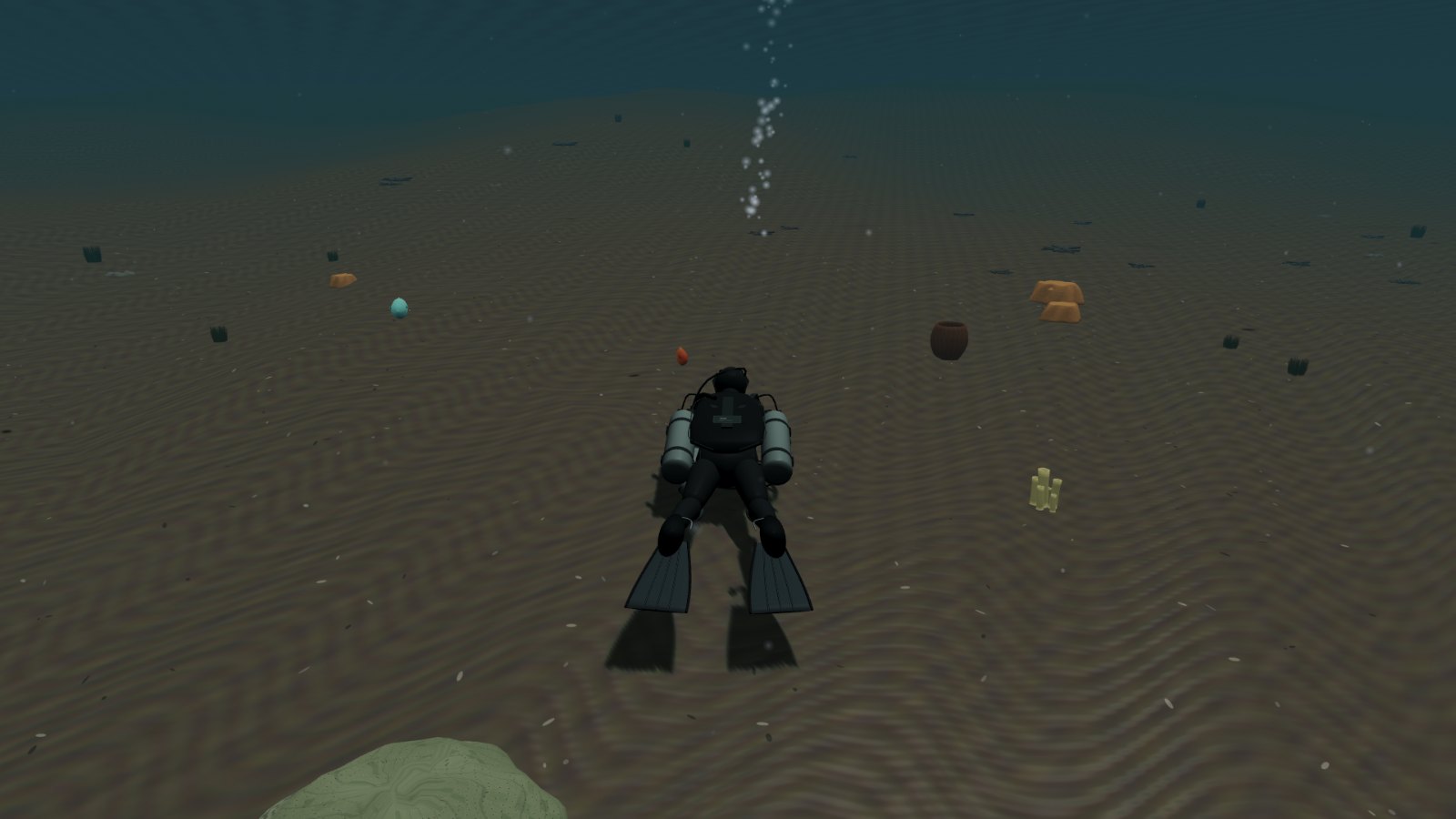
Net buoyancy comes from displacement against weight, with the wing volume following Boyle as depth changes and suit compression on top. Add gas, vent, dump. Descents accelerate if you do nothing about them, exactly the way they do in the water.
Trim and propulsion
Body angle drives drag, kick efficiency and gas use. A frog kick is an impulse and a glide, not a constant speed. Head-up divers burn gas and stir the bottom; the sim knows.
Gas and sidemount
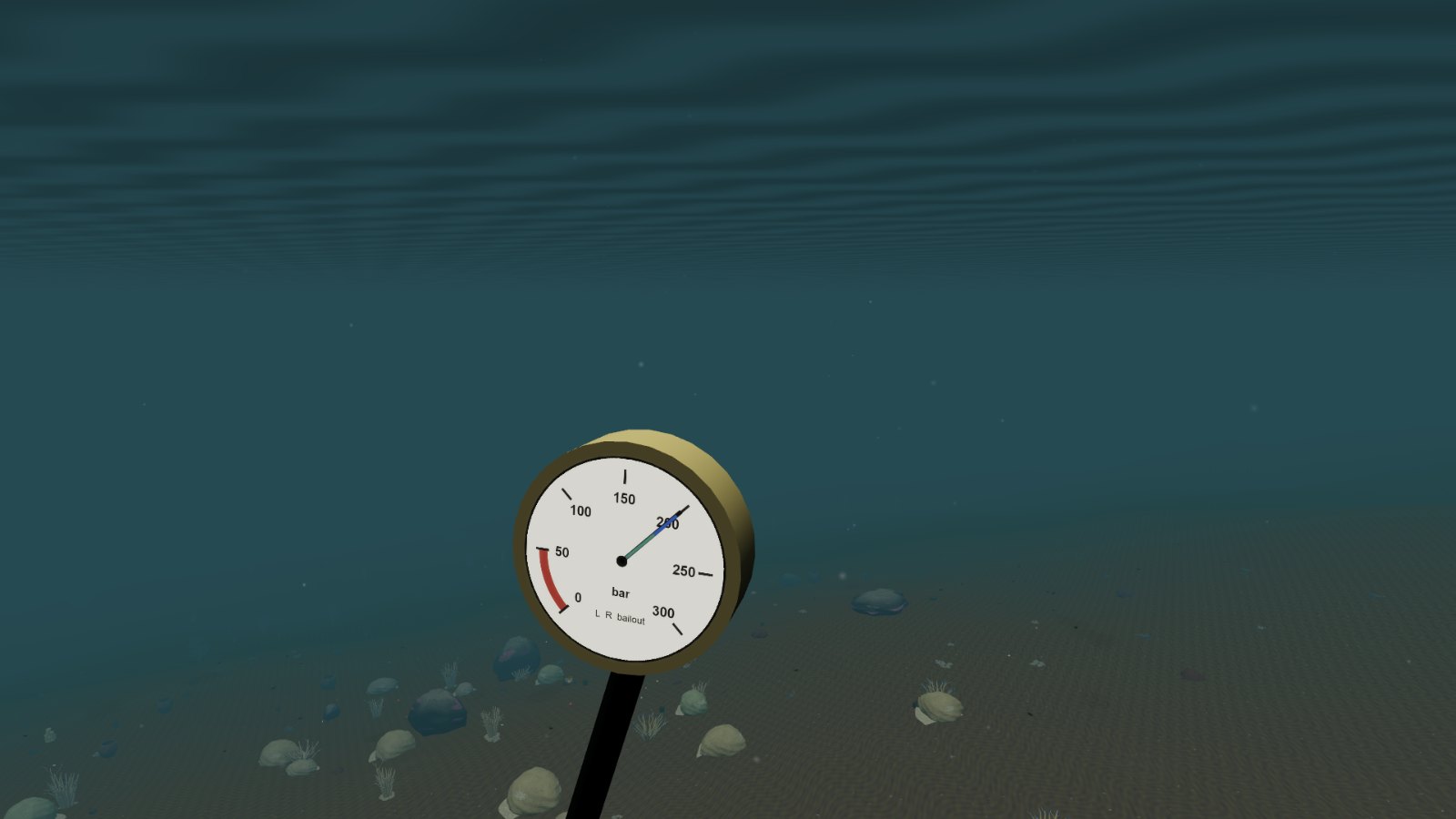
Surface consumption scaled by ambient pressure, effort, trim and stress. Two primary cylinders with a regulator switch rule and a bailout that never gets touched automatically. A real pressure gauge on a hose, read by lifting it.
Decompression and alarms
A Buhlmann ZHL-16C tissue model with gradient factors. No-decompression limits, ceilings, ascent-rate alarms, safety-stop tracking and a low-gas chain, all validated against published tables in the test suite.
Telemetry and replay
Every tick is recorded. The same inputs produce the same dive, byte for byte, so a profile can be replayed, stepped through and compared. The debrief is a depth and time graph with every event on it.
Distraction as the mechanic
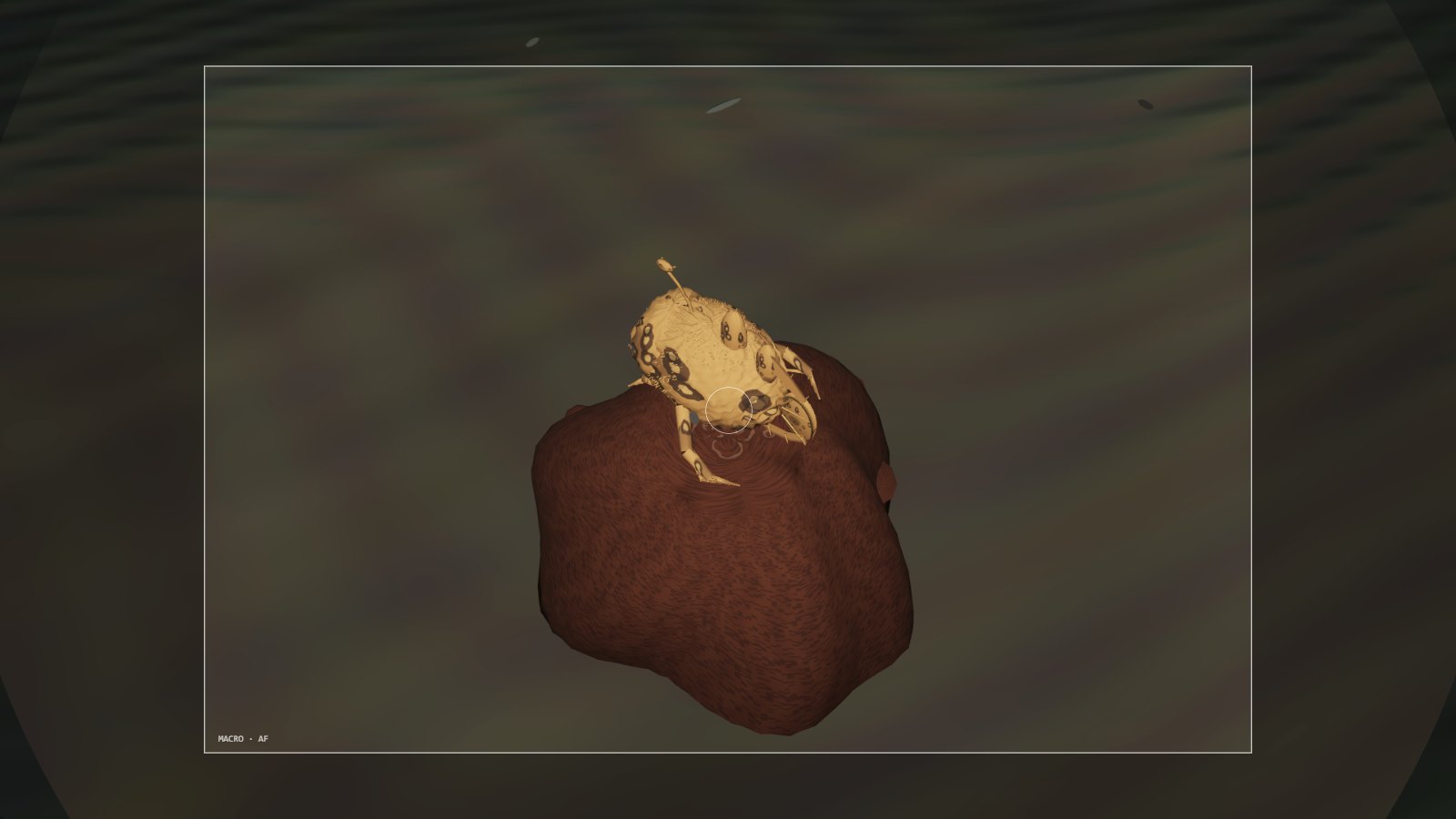
The photo dive adds a macro camera and rare animals. Raise the camera and you lose the wide view; the depth drifts, the gas goes, the ceiling creeps up. The game is staying a competent diver while something wonderful steals your attention.
Two layers, one engine
The simulation and the photo dive are separate on purpose, so the training value never depends on the entertainment.
The simulation core
- Headless dive model: pressure, gas, buoyancy, trim, propulsion
- ZHL-16C decompression with gradient factors
- Dive computer logic and alarms as a configurable profile
- Sites, species and hazards as validated content packages
- Telemetry, deterministic replay and a scenario harness
- No game concepts inside. Ever.
The Romblon photo dive
- A muck and reef slope from 3 to 25 metres, modelled on Romblon
- Painted frogfish, nudibranchs and a pygmy seahorse to find
- A macro camera that locks you into first person while it is up
- Photos scored on framing, focus, distance and your diving during the shot
- An album that persists between dives
- A debrief that shows what the distraction cost you
A second dive site, or a course module with no camera at all, would sit on the same core without touching it.
For TDI/SDI and PADI instructors
The agenda for this project is an instructor's aid: something you put on the classroom screen between the theory session and the pool, and something a student can take home and repeat. It is being built by a TDI/SDI certified Divemaster who also writes the software, so the questions it asks are the ones a divemaster asks.
- Show buoyancy, trim and the Boyle effect on a projector before the pool session, with numbers the class can argue with.
- Run a scripted scenario: a blown ascent, a low-gas switch, a missed safety stop, a decompression ceiling. Watch what the computer says and when.
- Debrief a student dive from the telemetry graph: where the depth drifted, when the ascent alarm fired, how long the task-loaded stretch lasted.
- Give a divemaster candidate a repeatable, deterministic dive to review, so the conversation is about decisions rather than memory.
- Practice instrument discipline: the computer and gauge are physical objects on the left arm, and every glance is a choice.
If you teach for an agency or run a dive centre and want to shape what this becomes, the fastest way is a conversation and a scenario you wish you could show your students.
Talk to us about a pilotWhat it is not
It is not a substitute for supervised training, pool time or open water. No screen replaces a breath at 18 metres.
The safety numbers are provisional. Ascent rates, stop rules and cylinder switch limits use common published defaults until they are checked line by line against agency standards, which is the next piece of work.
It is a prototype today: a grey-box reef, early creature models, one site. The dive physics and the decompression model are the finished parts; the pictures are catching up.
Common questions
Why is there a camera in a dive simulator?
Because distraction is what breaks good divers. The core of TRIM is a headless dive model with no game ideas in it at all. The macro-photography dive on top of it gives you a reason to look away from your instruments, which is exactly when buoyancy, gas and ascent rate go wrong. A course module with no camera at all would sit on the same core, and the core never learns about photo scores or rarity.
Is this a game or a training tool?
Both, deliberately. The game is the reason a diver wants to spend an hour in it. The simulation underneath is the reason an instructor can trust what it shows. The core mechanic, staying a competent diver while distracted, is the same skill every instructor is trying to build.
Which agencies is it aimed at?
TDI and SDI first, because that is where the founder trained and holds his Divemaster rating, then PADI. The goal is an instructor aid that matches how each agency teaches buoyancy, gas management and ascent procedures, not a replacement for any of their courses.
Will it teach me to dive?
No. It will make the physics visible and let you fail safely and repeatably. Learning to dive happens in the water with an instructor.
What is simulated and what is simplified?
Pressure, gas consumption, buoyancy, trim, propulsion, ZHL-16C decompression, computer alarms and reef contact are modelled. Every shortcut is written down in a simplifications log with its training consequence, so nobody mistakes a convenience for the truth.
What do I need to run it?
A desktop browser. It runs on WebGL2 with a WebGPU option, and it has been tuned to hold 60 frames per second on a laptop integrated GPU. There is nothing to install.
Who built this?
Keystone Analytics, a software studio registered in Austin, Texas. The founder is a TDI/SDI certified Divemaster and a software engineer; the dive site is modelled on Romblon in the Philippines.
Try the prototype
Desktop browser, nothing to install. Expect grey-box art and finished physics.